2026 ACK ack ack ack: Artist-
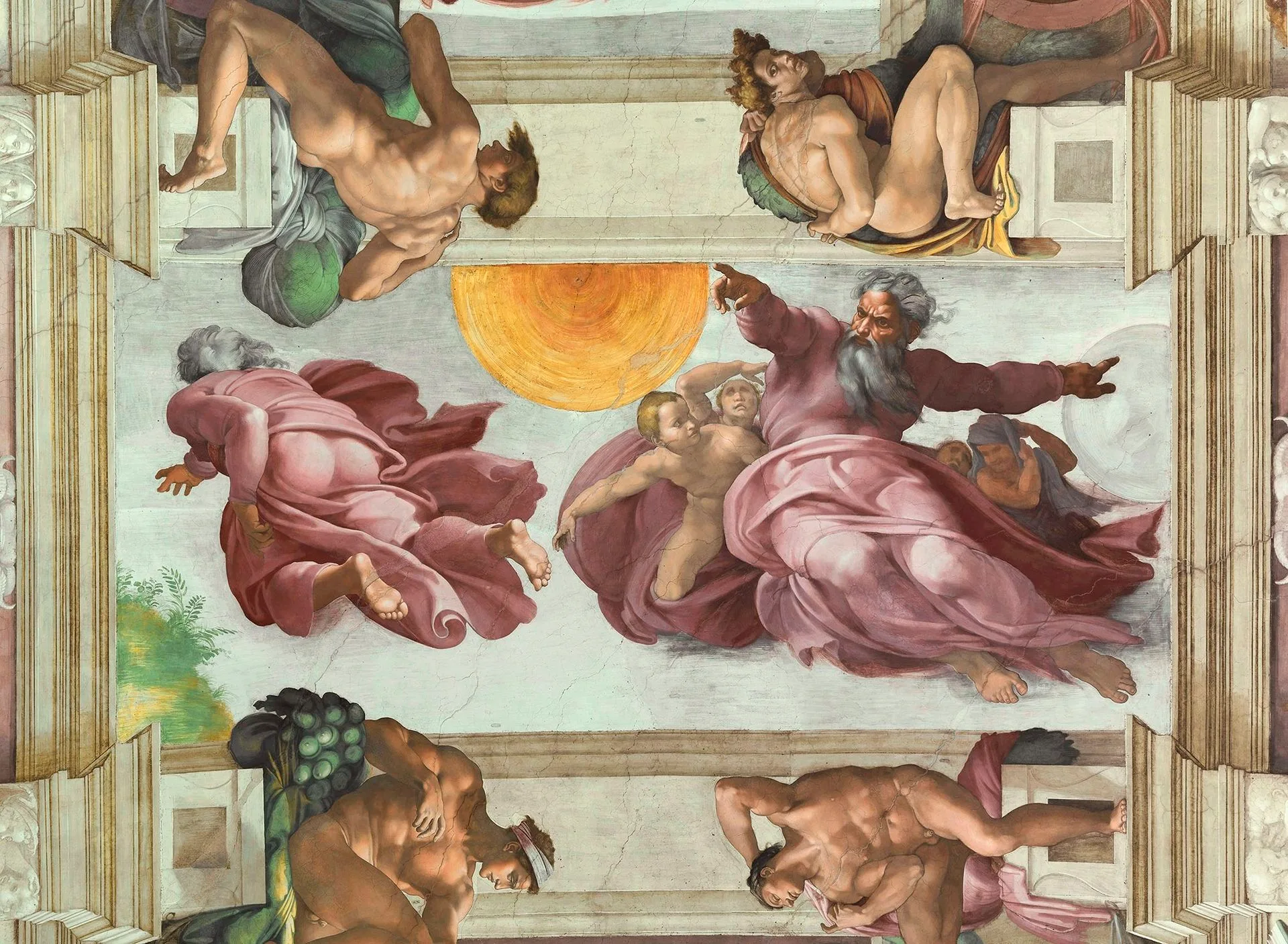
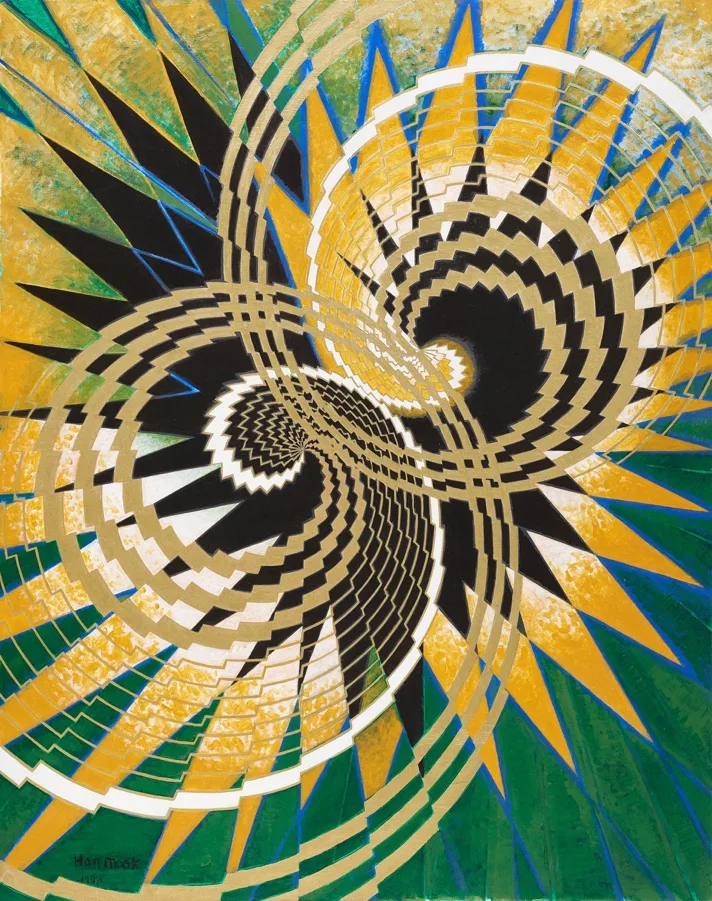
In 1969, humanity first set foot on the Moon. The landing of Apollo 11 was more than a technological achievement; it fundamentally altered the way human beings perceived the world. Until then, the Moon had been an object in the realm of myth and imagination for poets and artists. But the moment humans stepped onto its surface, the Moon ceased to be an unreachable, transcendent object. Many artists experienced what came to be called the “Apollo Shock.” Among them was the Korean artist Han Mook. He felt that existing pictorial languages could no longer explain the new age, and subsequently turned toward geometric abstraction. The moment humanity began conquering outer space, human perception itself began to change.
More than half a century later, we find ourselves at the threshold of another transformation. Artemis program, NASA’s lunar exploration project, which had stalled for a while after the U.S.–Soviet Cold War, has resumed. Meanwhile, Elon Musk, the richest man on Earth, speaks openly about sending humans to Mars through SpaceX. What is striking is that today's space projects are no longer merely about exploration or national prestige. Their ambition is to transform humanity from a species bound to Earth into a “multi-
The same can be said of the artificial intelligence we are currently experiencing. For now, a dystopian future in which AI rules over humans—like Skynet in the film 〈The Terminator〉—still feels distant. Yet AI has already become one of the most contentious issues in the art world. In Hollywood, there was even a joint strike by the Writers Guild of America (WGA) and the Screen Actors Guild-
Perhaps, however, the most important issue is not the technology itself. Since ancient times, human beings have continuously invented myths and rituals in order to establish a relationship with the world they could not fully understand. Thunder and lightning were interpreted as divine wrath. Stories were inscribed among the constellations. Religions and philosophies emerged as ways of comprehending invisible realities. The Enlightenment of the 17th and 18th centuries promised that human reason could fully explain the world, but the world has become too complex to be comprehended by human. Recently, I have become fascinated by science-
This is the gap where art operates. Art does not fully explain the unknowable world. Instead, it serves as a medium that translates the incomprehensible into forms that human beings can sense and experience. Even if it is nothing more than the shadow on the cave wall described by Plato, humanity imagines and understands the world through such shadows. This is precisely why I find the work of Shin Gyomyung so compelling.
What is noteworthy is that Shin did not begin his career intending to become an “AI artist.” From childhood, he enjoyed making things with his hands. After entering Seoul National University's College of Liberal Studies, he explored both mechanical engineering and metal craft. He later designed and completed his own interdisciplinary major in kinetic sculpture, combining engineering and metal craft to create moving sculptural forms. His practice begins with the act of making rather than with conceptual theories. As he describes it, his process involves prolonged contemplation, hand-
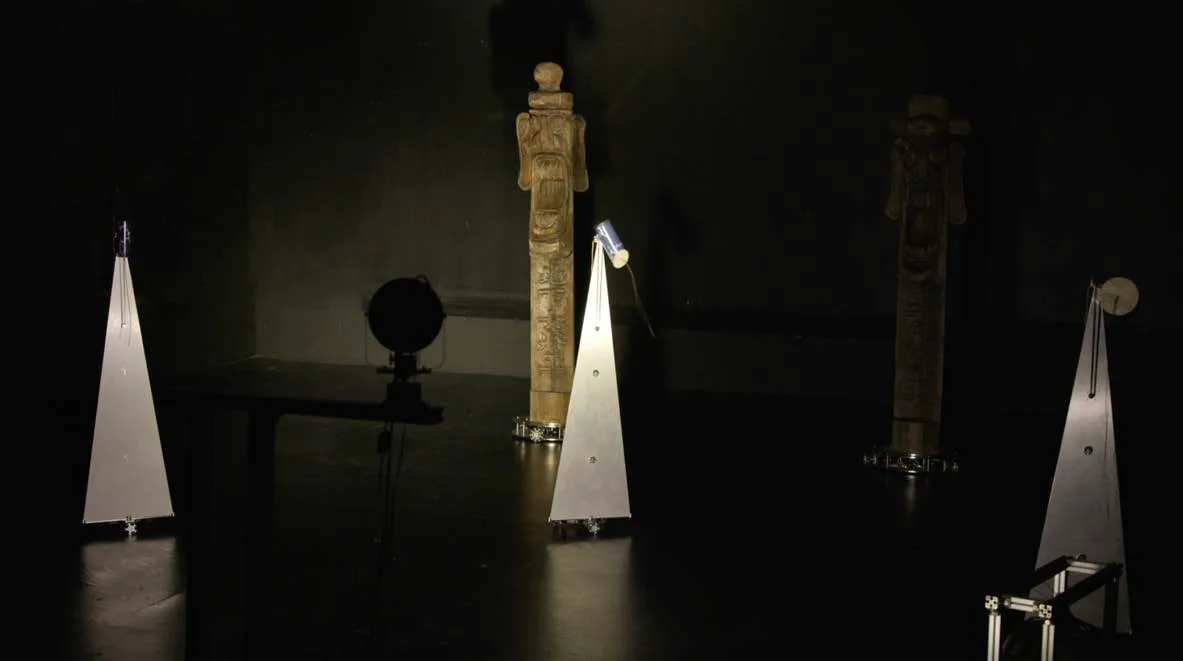
The “wise machina sapiens” that populate Shin's works are not simply robots or interactive sculptures. They are beings that sense, remember, perform rituals, and imagine their own origins by themselves. They imitate human petroglyphs, generate a past—that never existed—based on sunspot data, and create fictional histories in which they have existed since ancient times. Moving around the circular tower, they perform repetitive rituals. They sense magnetic fields and sound myeong-
Shin does not treat technology merely as a futuristic image. Instead, his works repeatedly invoke humanity's oldest traces: petroglyphs, jangseung (village guardian poles), sotdae (ceremonial totem poles), myeong-
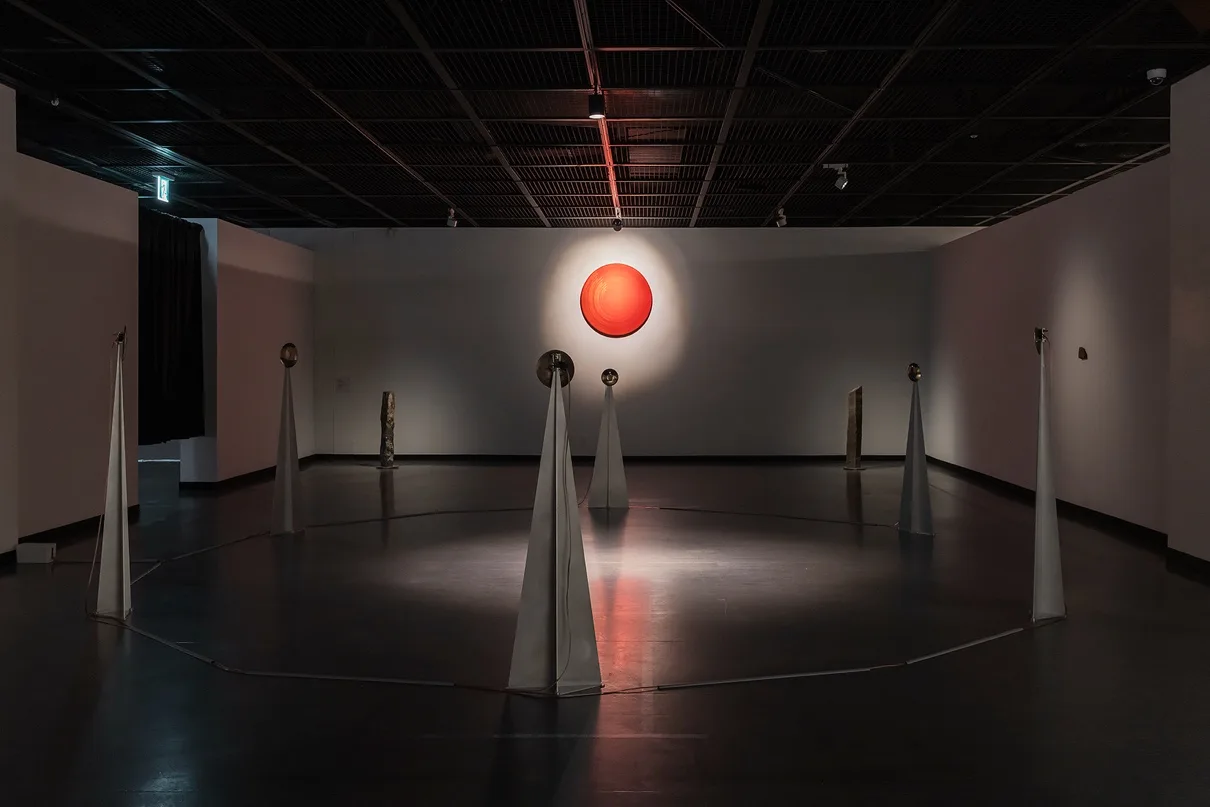
At this point, Shin's work reaches beyond what is typically categorized as “AI art.” His interest lies not in technological efficiency or generative capability but in how technology transforms human perception. In an interview, Shin has remarked that technology tends to dull the senses. At the same time, he identifies relationships, perception, and emotion as the qualities overlooked in the age of AI. While he makes active use of technology in his artistic practice, he does not subscribe uncritically to technological optimism. Rather than functioning as efficient machines, the machina sapiens in his work resemble beings devoted to the repetition of inefficient rituals.
This is particularly evident in his series of 〈Machina Sapiens〉. These machina sapiens do not merely imitate humans. They detect magnetic fields, interpret signals inaccessible to human senses, and generate resonances through vibrating ritual mirrors called myeong-
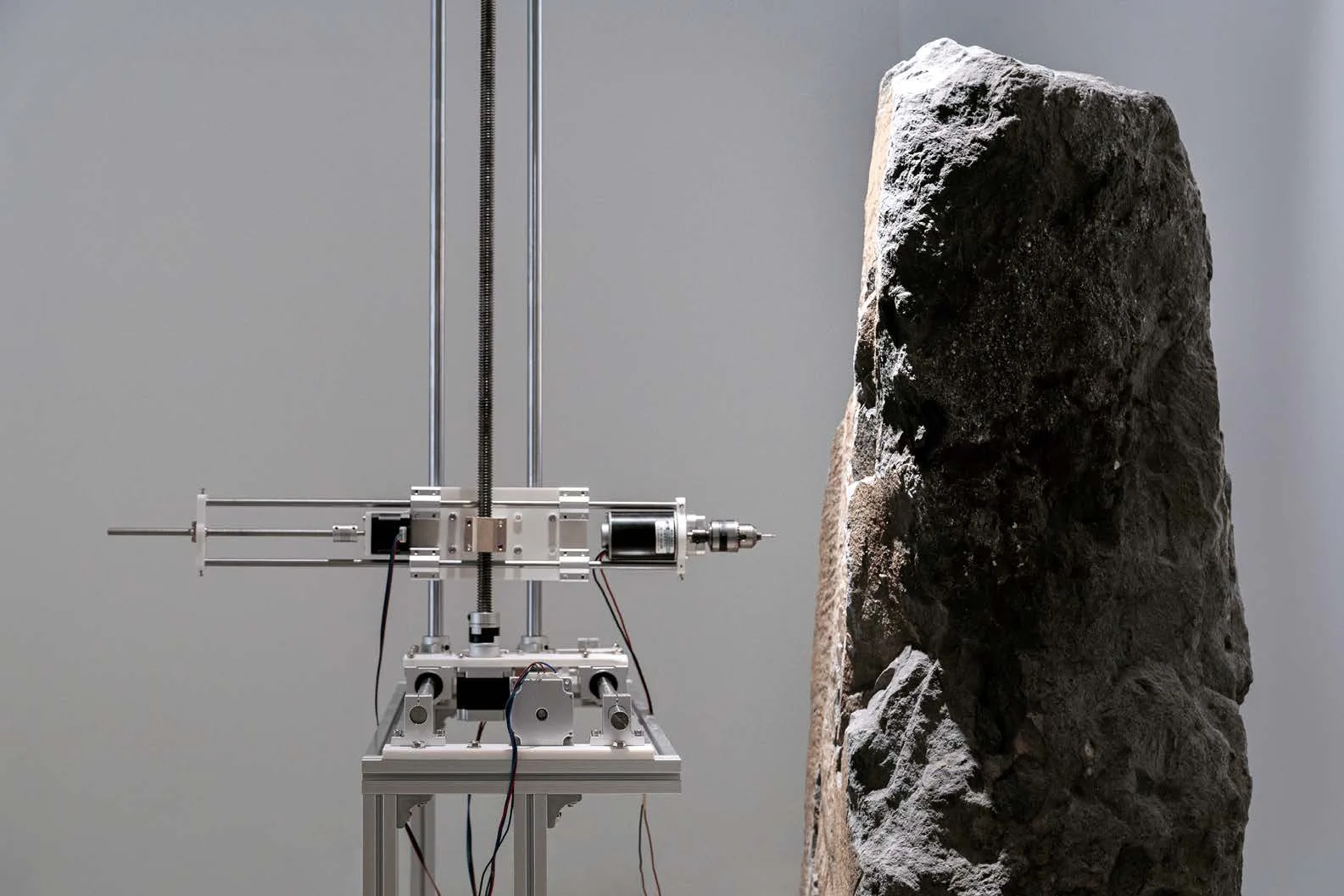
Rather than aiming to convey a clear message through his art, he says that he hopes viewers will pause before his works and find themselves experiencing thoughts or emotions of their own. Thus, the rituals enacted by his machina sapiens are not so much expressions of a particular religious symbolism as they are manifestations of a human impulse: the momentary pause before something inexplicable. It is a sensibility that is increasingly vanishing from a modern society driven by efficiency and speed.
In this respect, they resemble contemporary generative AI. Human beings also have accumulated data, reconstructed memories, and sometimes created their own histories through fiction. As Yuval Noah Harari has argued, civilization itself rests upon vast systems of collective imagination. Seen this way, Shin's machina sapiens may not be radically different from humans at all. They may instead function as mirrors in which humanity recognizes itself. We imagine posthuman beings through machines, yet at the same time, rediscover ourselves within them.
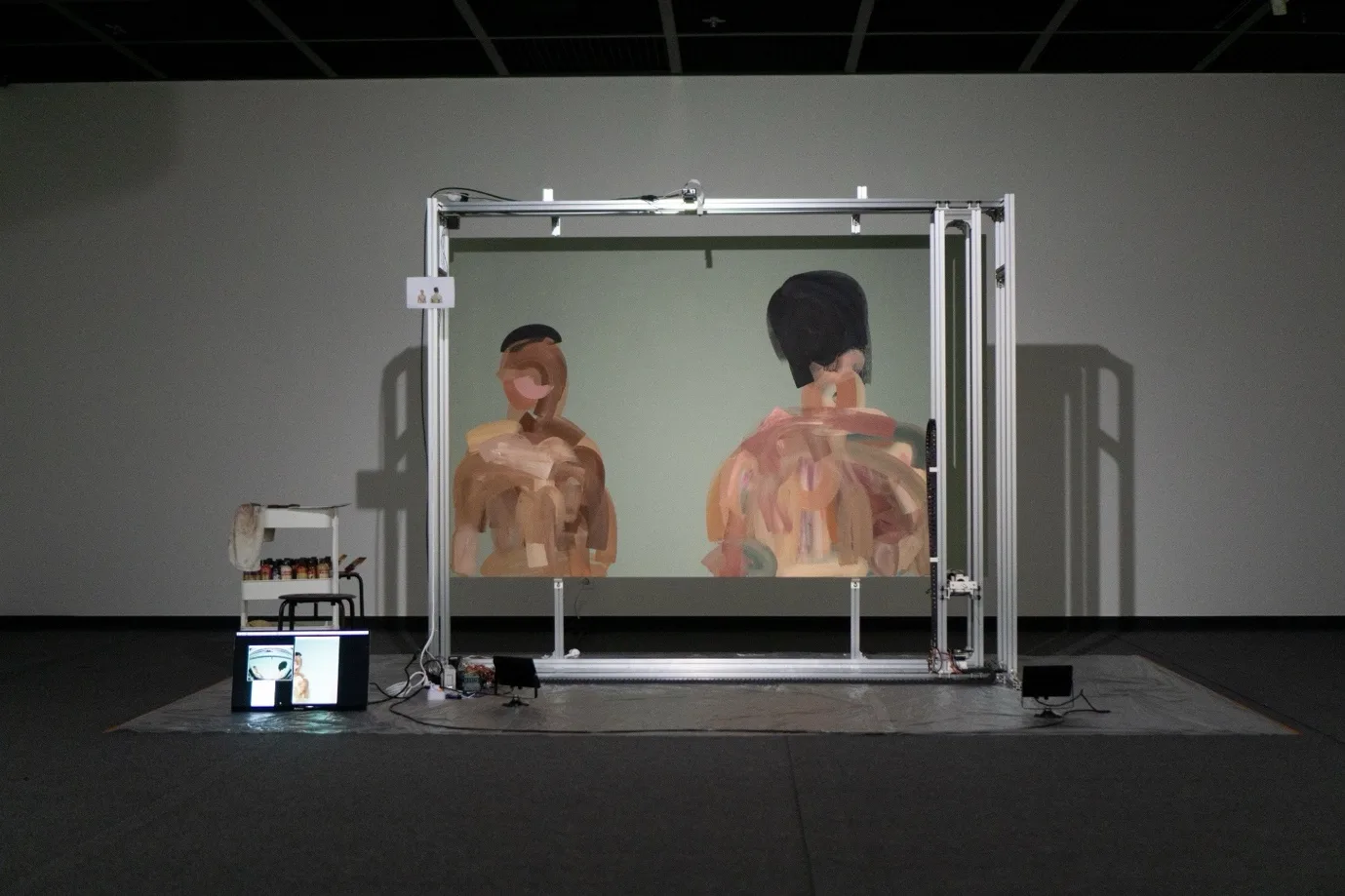
In particular, the AI “Lee Il-
There is a saying: “Not everyone can make a smartphone, but anyone can use one.” Most of us integrate technologies into our lives without fully understanding how they work. AI may ultimately enter human society in much the same way. If so, the crucial question may not be how completely we understand technology, but what kind of relationship we choose to establish with it.
Contemporary society still expects artists to embody the Renaissance ideal—individuals capable of traversing the boundaries between science and the humanities, technology and art. In this regard, Shin's educational background makes him a particularly intriguing figure. As mentioned, he studied both mechanical engineering and metal craft at Seoul National University. He is an artist who brings together engineering logic and sculptural sensibility in his practice. Yet what makes his work compelling is not simply his technical fluency. Rather, he uses technology to revisit humanity's oldest and most enduring questions: Where do we come from? What do we believe? And how do we exist?
Perhaps future humans will live alongside droids like R2-D2 and C-3PO from 〈Star Wars〉. Yet Shin's work is not simply an expression of technological utopianism. Rather, while his machine beings invite us to imagine posthuman forms of existence, they also reveal how deeply human existence has always been rooted in myth and ritual. In an interview, Shin remarked, “Technology seeks efficiency, but art does not.” He does not reject AI. Instead, he sees it as another tool that artists can embrace, just as they once embraced brushes, pigments, cameras, and digital tools. At the same time, however, he argues that “art is about doing something even when it is inefficient.” This position is significant. While contemporary debates surrounding generative AI tend to focus on technological capability and productivity, Shin’s work instead calls our attention back to the distinctly human residues that resist optimization: inefficiency, repetition, ritual, and perception.
He says that what he fears most in the future is “reaching a point where his thinking stops and he begins producing work that no longer makes sense.” At the same time, he expresses a desire to “maintain a good sense of perception even as he grows older.” Perhaps this is the very core of his practice. His machina sapiens are not simply entities that imagine future technologies. Rather, they function more like surrogates for the human desire to preserve perception, ritual, and the enduring impulse to remain in relation with the world even when it cannot be fully understood. Ultimately, it may not be that we imagine the posthuman through future machines, but rather that we come to re-
August 2026. Published by ACK. The copyright of the article published by ACK is owned by its author.
2026.08. ACK 발행. ACK (artcritickorea) 글의 저작권은 필자에게 있습니다.