2026 ACK ack ack ack: Artist-
Sound does not linger; it fades away and vanishes. Yet the sound of that day does not vanish.
A Sound Suspended Before Completion
Each different voice recounts an incident. The tone varies, and so does the content. The sounds that seep out of the artwork are human voices. A human voice carries life within it. It is a living sound. Thus, we could say that the sound carries the breath of life. The sound of breathing—it is the sound of breath entering the body, passing through the vocal cords, and emerging again. Yet when that sound is recorded, it somehow resembles a mechanic sound. The life has vanished.
The sound with vanished life resembles an event lost to the passage of time. The vividness of a moment gets soggy as time goes by. Over time, the rememberer's perceptions merge with the facts themselves. Whether those perceptions are objective or subjective does not matter. Through her practice of externalizing memory, Choi Seo-
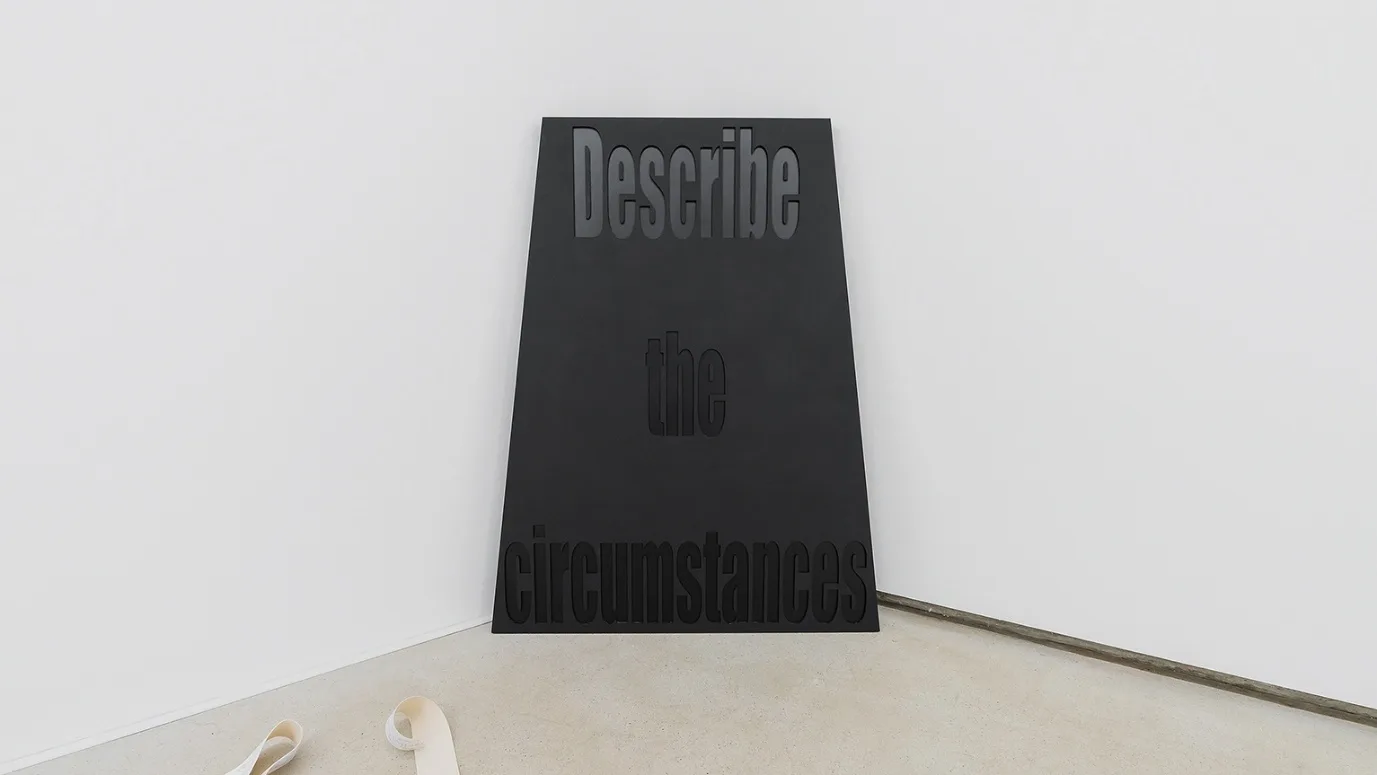
This experimental body of work began with a sentence, which gradually took on form. From that form emerged a three-
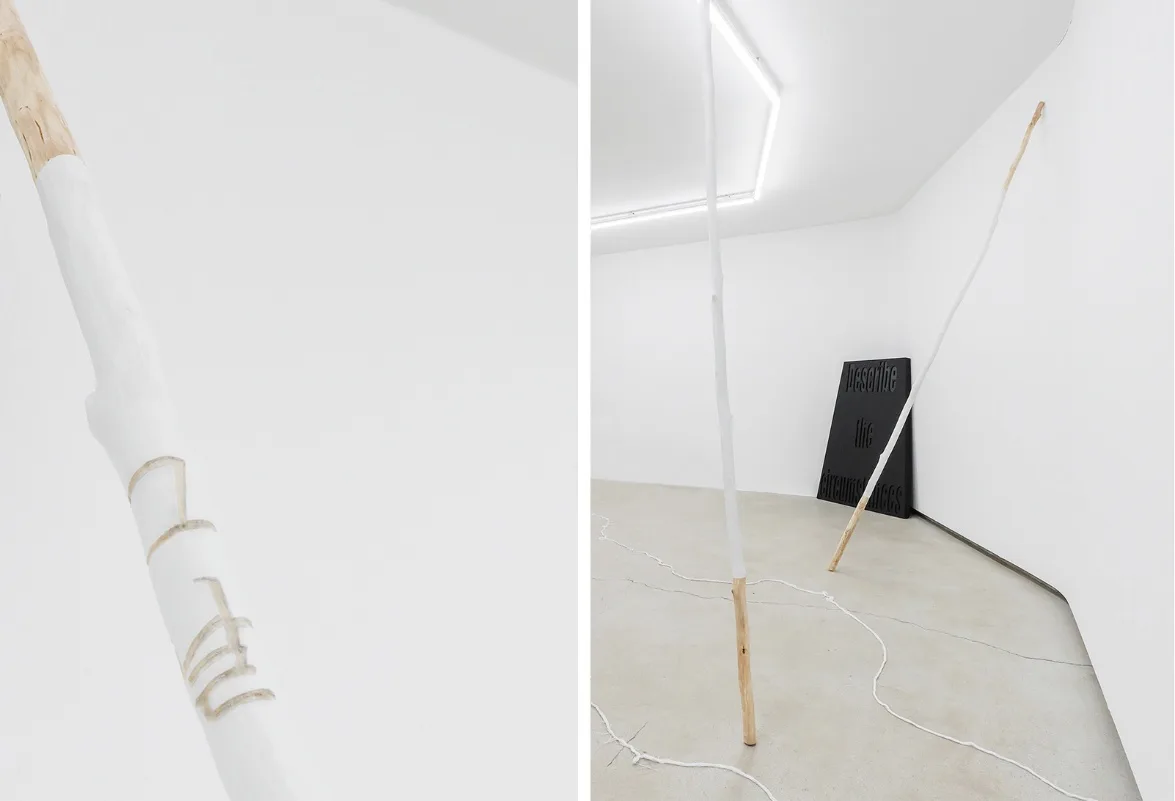
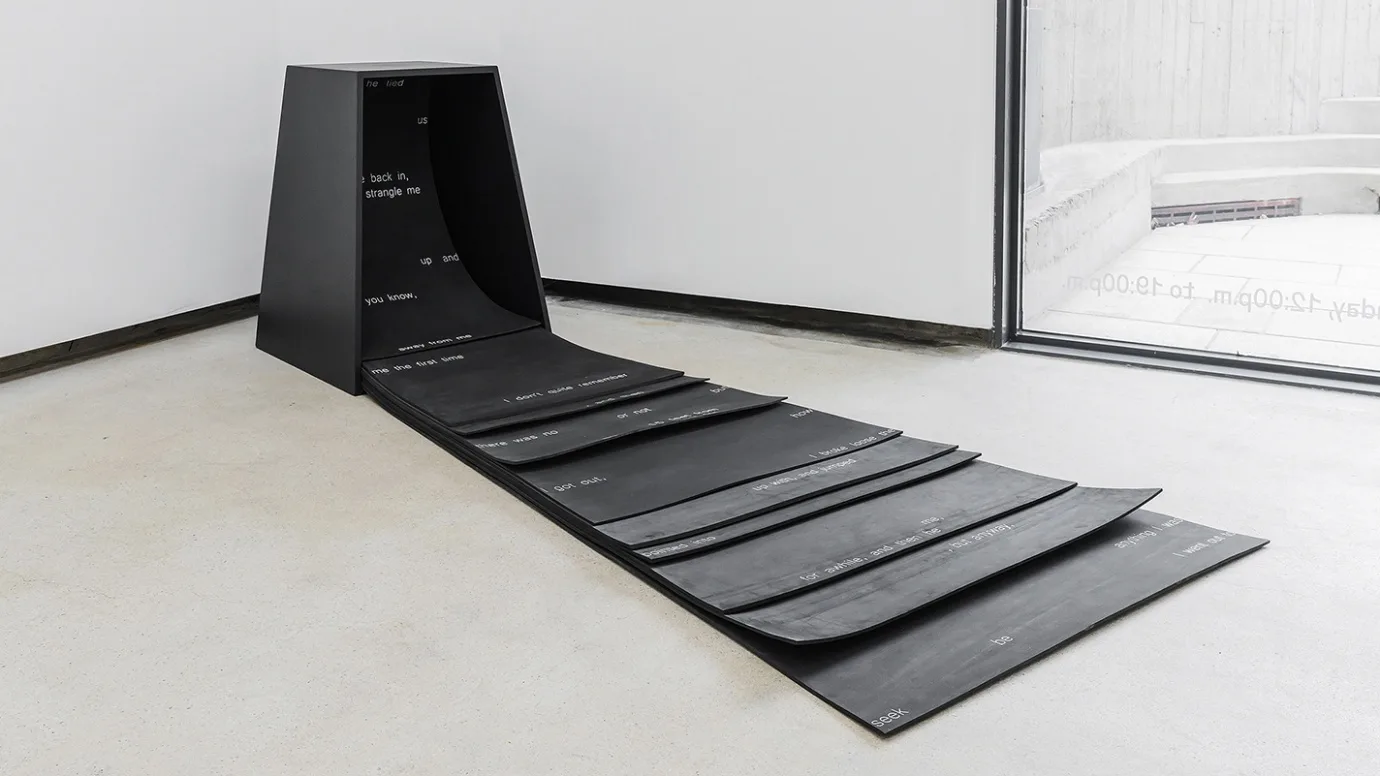
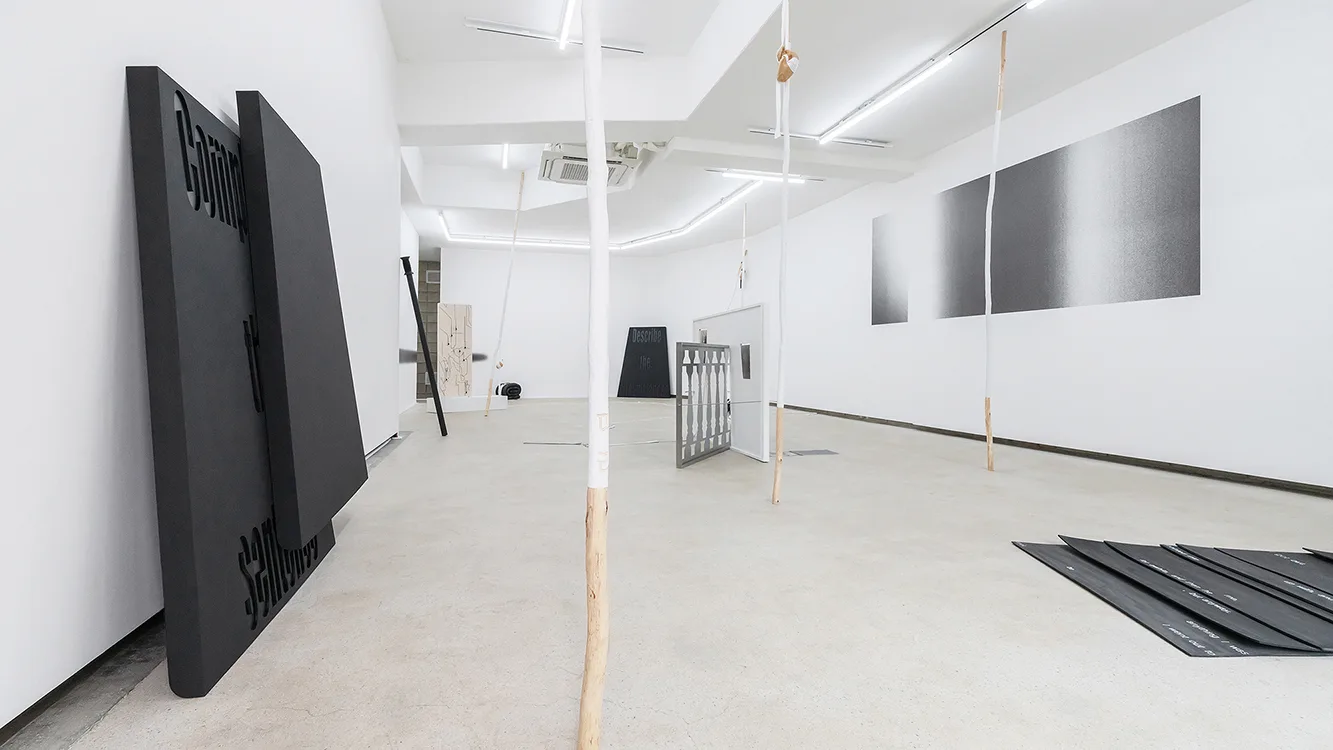
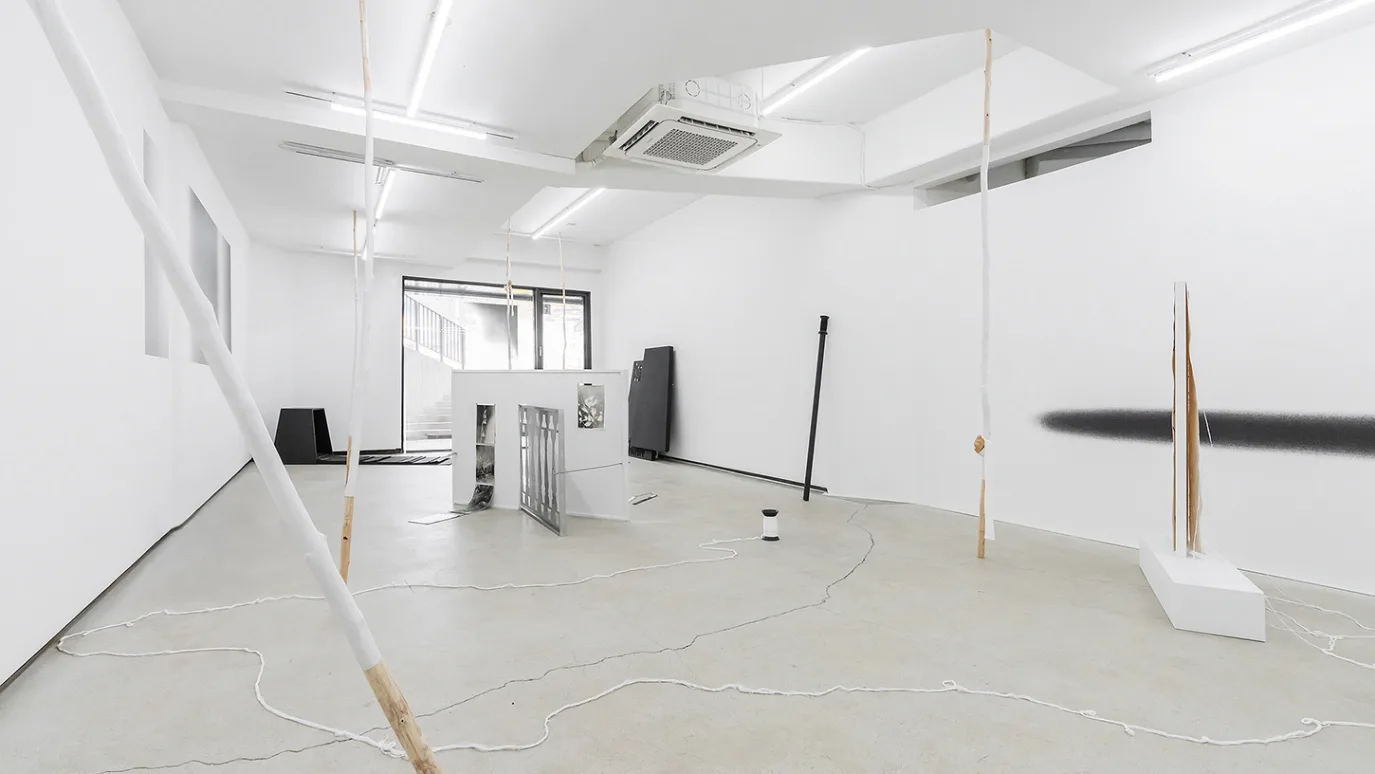
Deprived of organic warmth and transformed into a dry, mechanical voice, the narration casts the entire exhibition into a state of taut psychological tension, together with the weight of the black rubber sheets, being like an elongated tongue, and its box from the work 〈Complete the Sentence – … – Describe the Circumstances 2〉. As the viewer's gaze and footsteps are drawn downward by the material mass spread across the floor, the formless sound escapes gravity, curling through the upper air of the gallery and entangling itself with the objects caught in pause throughout the space. In a similar manner, the pliant wooden columns and the cascades of unraveling thread function like adhesive and weave the heterogeneous fragments scattered across the exhibition into a single, expansive landscape of memory.
The viewer senses the gap between the incompleteness of the unresolved visual text and the repetition of sound drifting through the exhibition space. Paradoxically, it is precisely within this unresolved zone that distance itself becomes a source of security.
Choi Seo-
Episodic memory is a form of long-
The artist’s work includes the exploration on what occurs when these visual scenes are translated into written text. At the moment a visual image is transformed into an arrangement of words, the fluid, vivid memory that once existed in the mind becomes confined within the rigid framework of text as a system of signs. Across the dense black surface of the mat, white fragments of text are scattered like shards, spilling outward onto the floor.
Fragmented phrases such as “I don’t quite remember”, stripped of their original context, likewise exist as traces of memories that have lost their vitality and become preserved in a fixed state. Visual episodes that once pulsed with warmth and breath within someone's inner world are now flattened into text, falling down across the cold gallery floor. As viewers follow the path created through the space in the exhibition hall, they encounter the materiality of private memory in a direct and intuitive way.
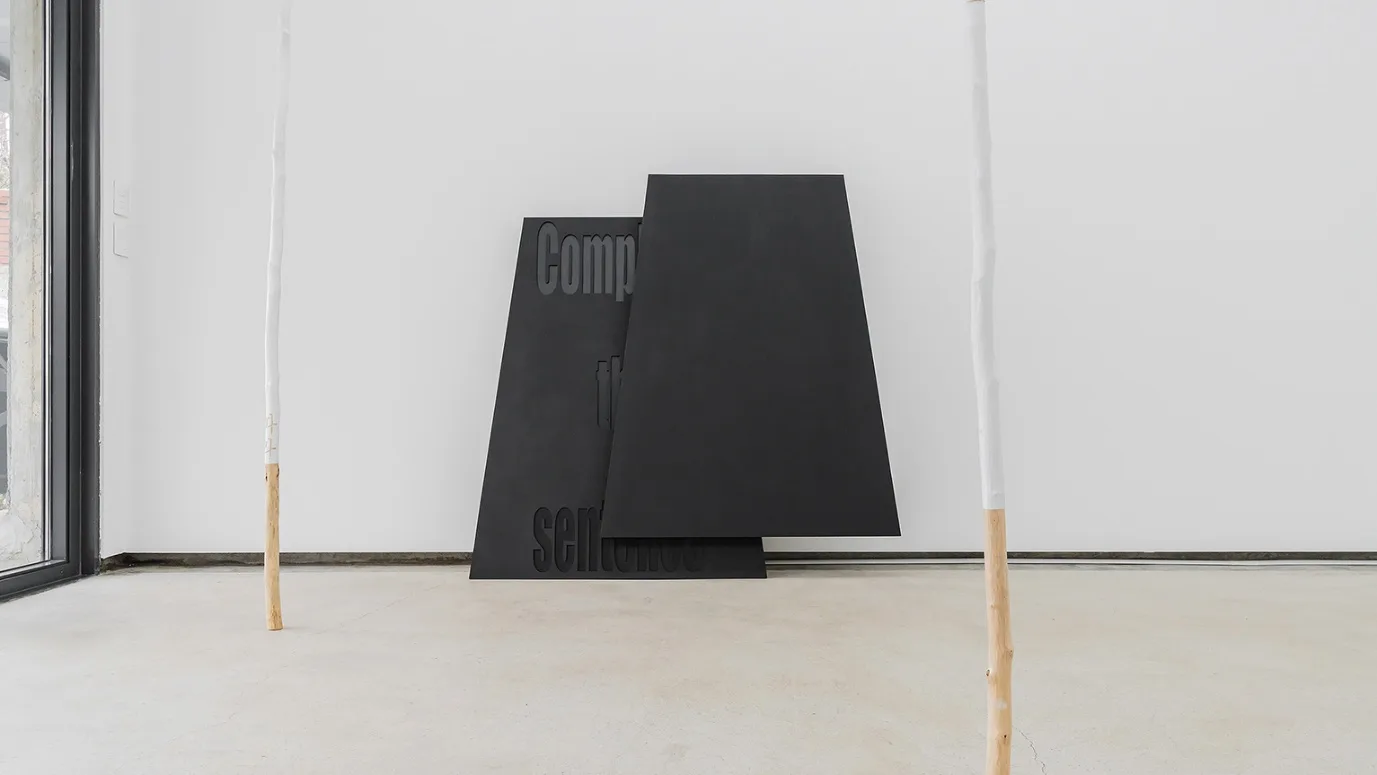
Viewers first pass among white-
If “I don’t quite remember” is a passive record of memory's failure, then “Complete the sentence” functions as an active imperative, demanding the completion of memory. Taken together, these two gestures suggest that the partially obscured text symbolizes a truth that remains fundamentally inaccessible, revealing the inherently incomplete nature of memory.
The sound installation that fills the space amplifies the irony of this forceful imperative. The artist recorded people's intimate episodes and transformed them into spoken sound. Repeated alongside the command “Complete the sentence,” these voices come across as restrained recitations, imbued with a quiet ambivalence toward memories that forever resist completion.
The distances—that separate art pieces saturated with discontinuity and incompletion—function as mediating intervals that widen the fissure between memory and perception. Moving through this deliberately constructed space of deficiency—between the incomplete texts and the repetitive cadence of mechanically reproduced voices—viewers are invited to weave together their own memories, arriving at a new form of episodic memory.
Materialization of a non-
Choi Seo-
The tightly bound black sponge mass casually placed on the floor—does it represent a compressed bundle of emotions, memories, or time? Or perhaps it is something significant that has been forgotten yet continues to exist with a certain weight.
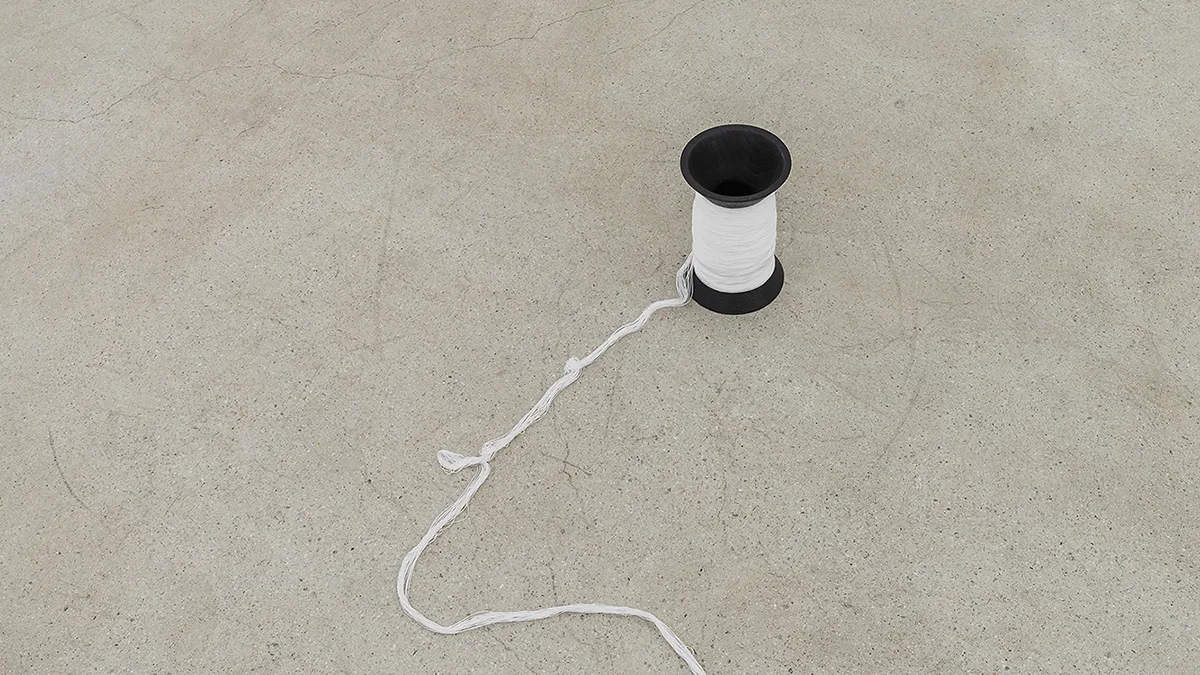
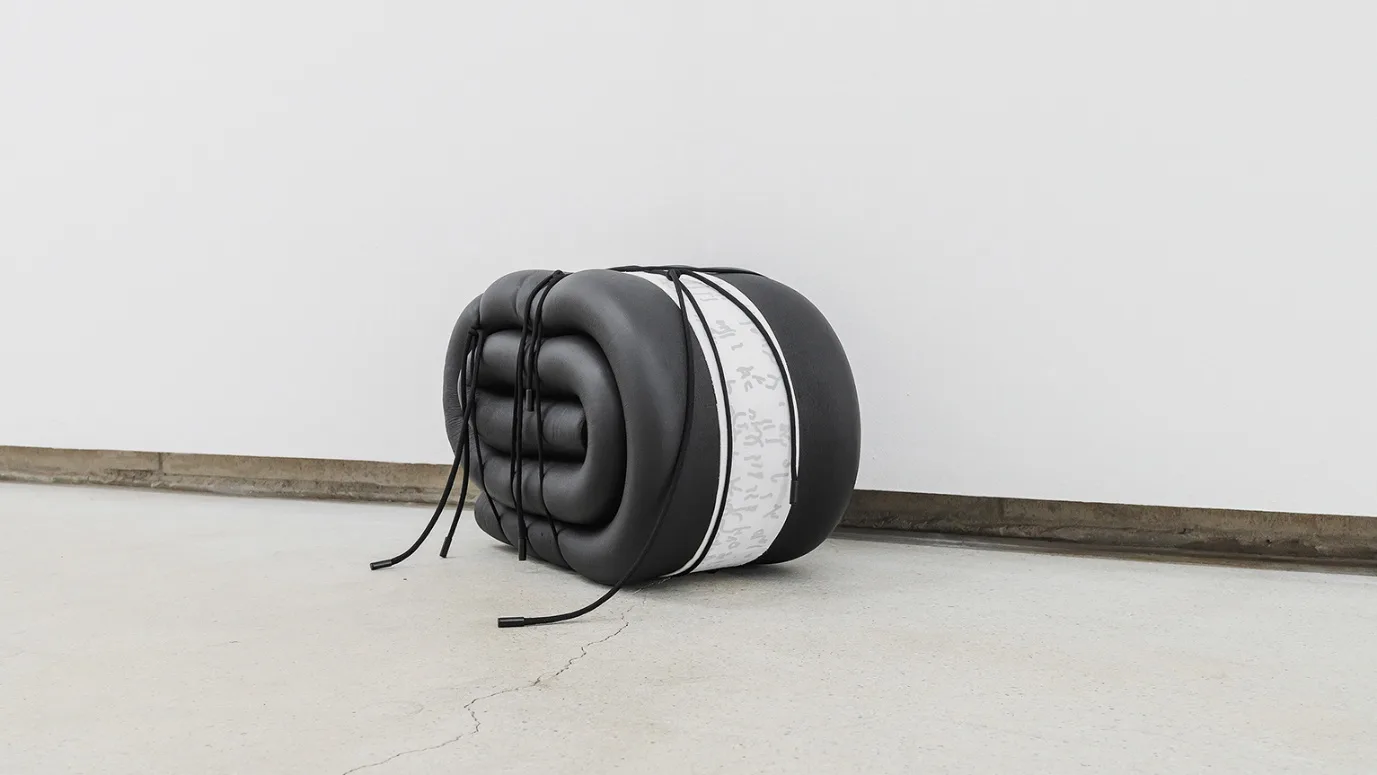
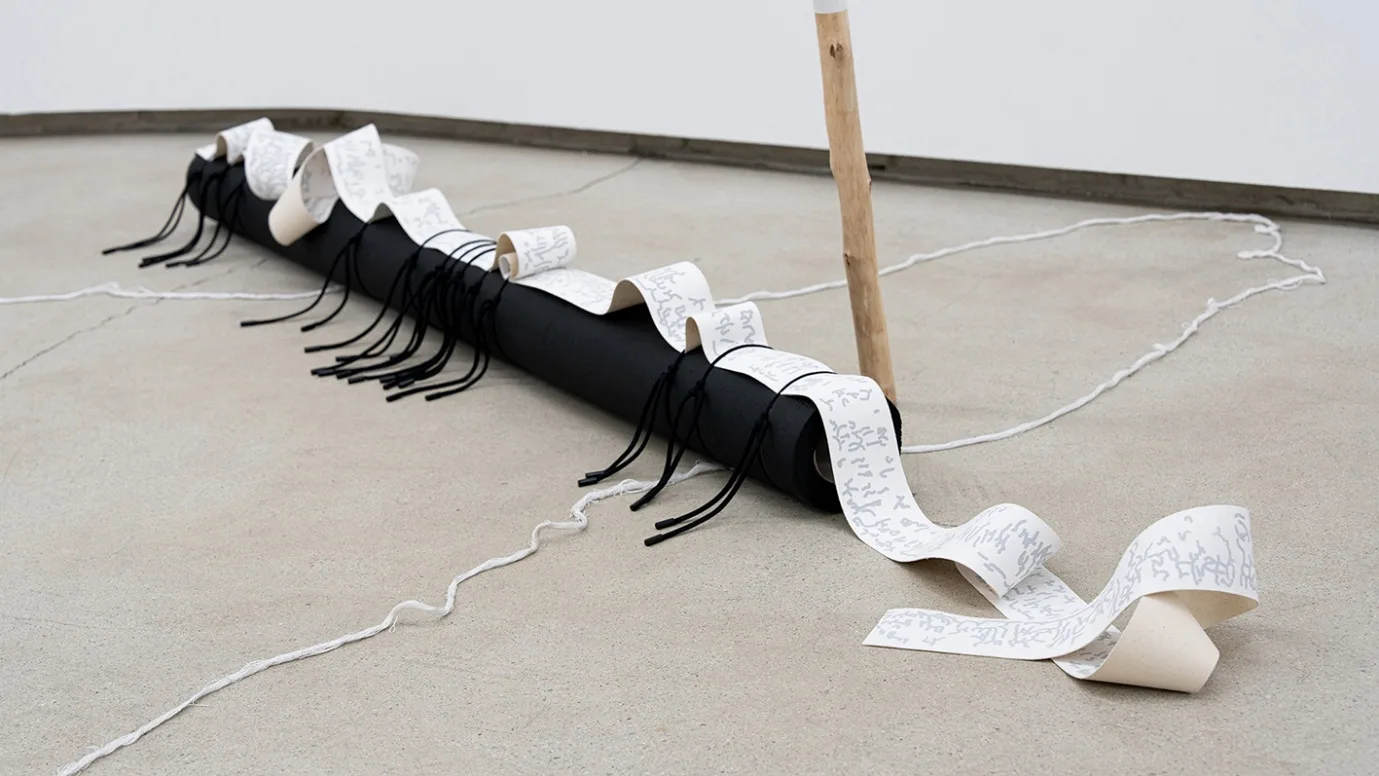
In this way, the material qualities of memory translated into objects generate an even more heightened tactile tension in the series of 〈Sign of the Crab 1, 2〉. Sentences printed through silkscreen move across the surfaces of soft, cushioned sponge and suede. This is again bound tightly with black cords. This form appears to visualize a mass of the inner self—something suppressed and unable to be uttered outwardly.
The elasticity of the sponge, which deforms when touched yet can never be completely damaged, resembles the persistent resilience of wounded private memories.
With the addition of the series 〈A Forest Resembling〉 and 〈Forest〉, in which letters are carved into the surfaces of wood, the texts inscribed by wounding a natural material prompt further reflection on the nature of memory itself.
These scenes in which memory becomes symbolized reveal the structural qualities of processed and controlled memory. And such works are positioned throughout the exhibition space—standing within the gallery, placed in corners, or occupying the central foreground.
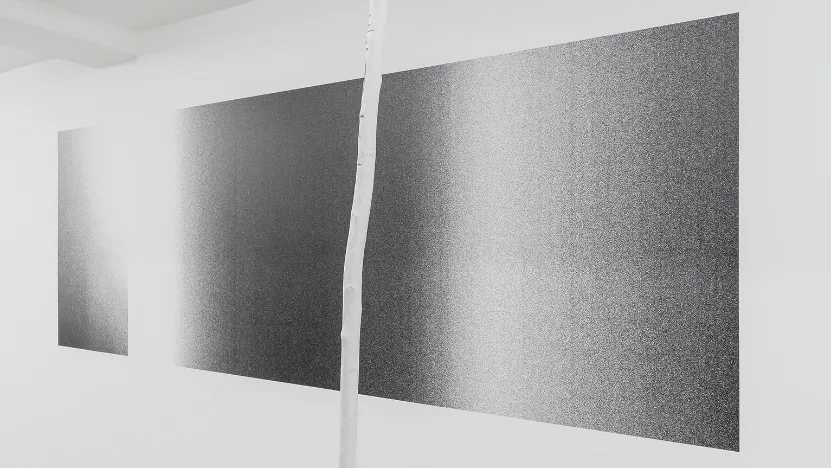
These fragments of memory, given a tangible form through the physical mass of their materials, begin to dissolve the closed boundaries that enclose the inner self.
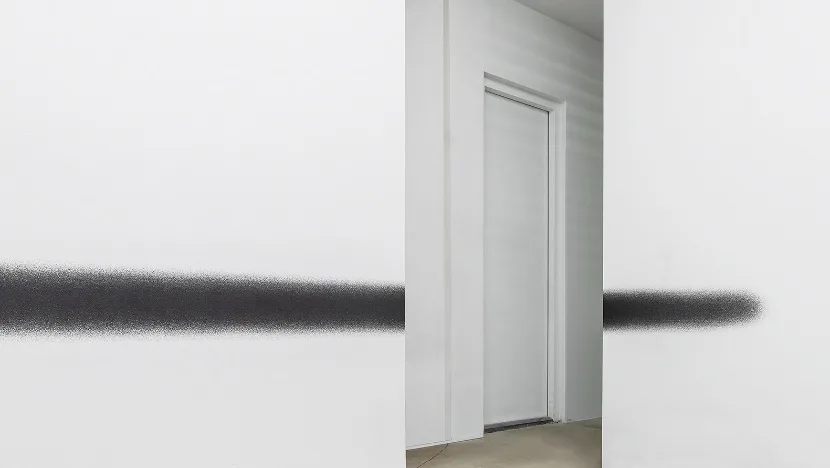
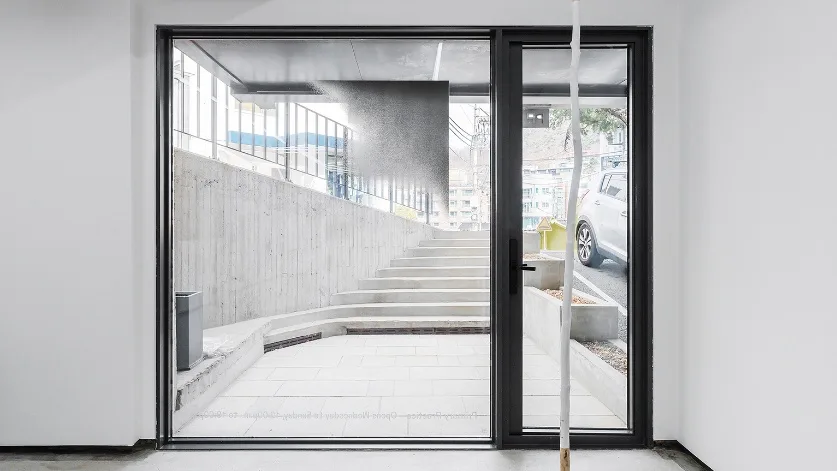
〈Touching Boundaries〉 crosses both the white walls and transparent glass windows at the front of the exhibition space, erasing the visual division between inside and outside through a black-
At the moment when the exterior view of the staircase and the everyday street beyond the window overlaps with the narrative of the solid floor and the rubber mat inside the gallery, the zone of “The Gray Between”—the ambiguous gray space created by the artist—finally completes itself as the narrative of the entire exhibition space.
It symbolizes that memories of private trauma or concealed events are not merely specters trapped within confined spaces, but are always present even at the edges of the most ordinary and supposedly safe spaces—the very ground on which now we stand.
In this way, Choi Seo-
The gaps created as vision is translated into text, and text is once again transformed into hesitant voices and weighty objects, offer viewers a sense of liberation. The contrast between the immateriality of sound—floating like a ghost after losing its vivid physical presence—and the gravity of material forms—crouched on the floor—produces the cognitive suspension. This grants us the freedom to reconstruct our own fragmented episodic memories upon the blank spaces where definitive answers have disappeared. It offers the freedom to accept an answer that does not need to be complete, one that may simply remain in a muted, gray tone.
August 2026. Published by ACK. The copyright of the article published by ACK is owned by its author.
2026.08. ACK 발행. ACK (artcritickorea) 글의 저작권은 필자에게 있습니다.