2026 ACK ack ack ack: Artist-
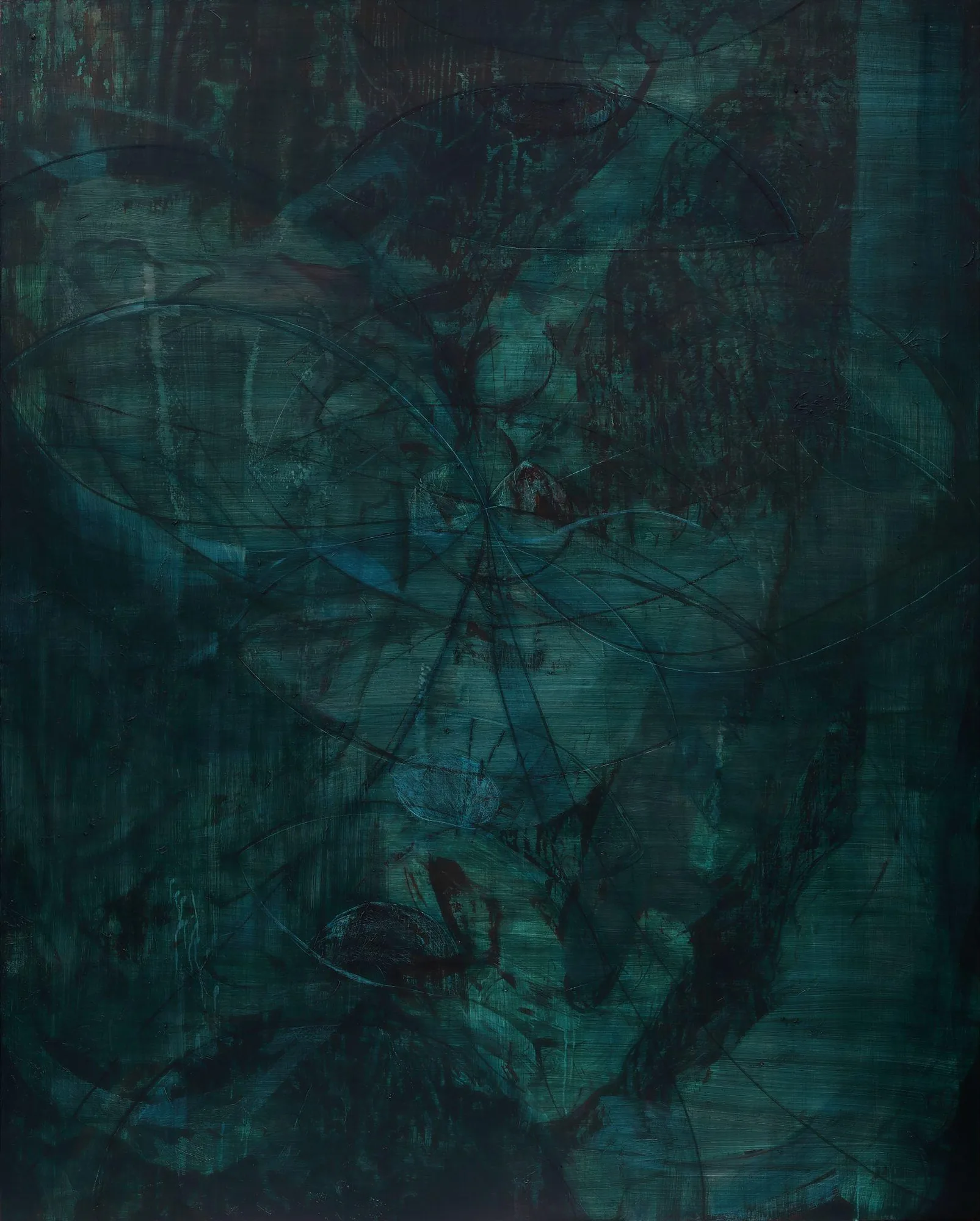
Just as beginnings and endings are fictions to time which flows on endlessly, the completion of a painting may be, rather than an ending, a decision to stop at the point that feels most appropriate. Lee Youngsoo's work begins with particular memories, yet painting is not an attempt to preserve or hold onto them. What the artist tries to capture is not a specific moment in time or a particular subject, but rather fragments of the past that are felt through the skin and bones. Though these memories have receded too far to emerge as distinct images, the artist attends to sensations and emotions that continue to linger within the body. Painting appears at the point where present and past, memory and bodily movement intersect and accumulate. Rather than adopting recognizable forms or images, or explicitly revealing a personal narrative, Lee seeks to make visible the very process of tracing the flow of memory. While completed forms may unfold into metaphor or narrative, the materiality of the painting and the traces of its making draw the viewer into the act of painting itself. Memory is mutable. It fades with the passage of time and may come to be understood in entirely different ways through new experiences and events. Despite this continual transformation and erosion of memory, Lee discovers emotions and sensations that remain—at once vivid and numbed. Even when attempting to bring these sensations into form, faded memories hang like a veil, preventing them from fully coming into focus. Memory mediates between past and present, yet it does not exist as a clean, linear continuum. Embracing the capricious nature of memory, Lee attempts to draw out, through the movement of painting, the sensations left in the body by moments long past.
The ocean in Solaris immediately returns to those who behold it tangible forms of the emotions concealed deep within their gaze. While these forms may resemble the past and appear to recreate memory, they are in fact closer to summoning emotions and sensations, through the mediation of particular forms, that have long been repressed. Likewise, the pictorial narrative is shaped less by memory itself than by sensations accumulated over time. From the moment a painting leaves the painter's body, it becomes a question of how narrative, materiality, and sensation might be connected. In this process, Lee Youngsoo attends less to memory than to sensation. Rather than following forms in order to reconstruct events, the artist traces the emotional and sensory residues that make those forms possible. Memory and sensation may become entangled through an event or experience, yet at some point they may separate. What was once a sensation bound to an event may then remain adrift, like the residue of an emotion that has lost its object. Focusing not on sight itself but on sensations that elude both the eye and language, Lee attempts to bring the embodied traces of memory onto the pictorial surface without distortion. Emotions and sensations so vague that they retreat into the catch-
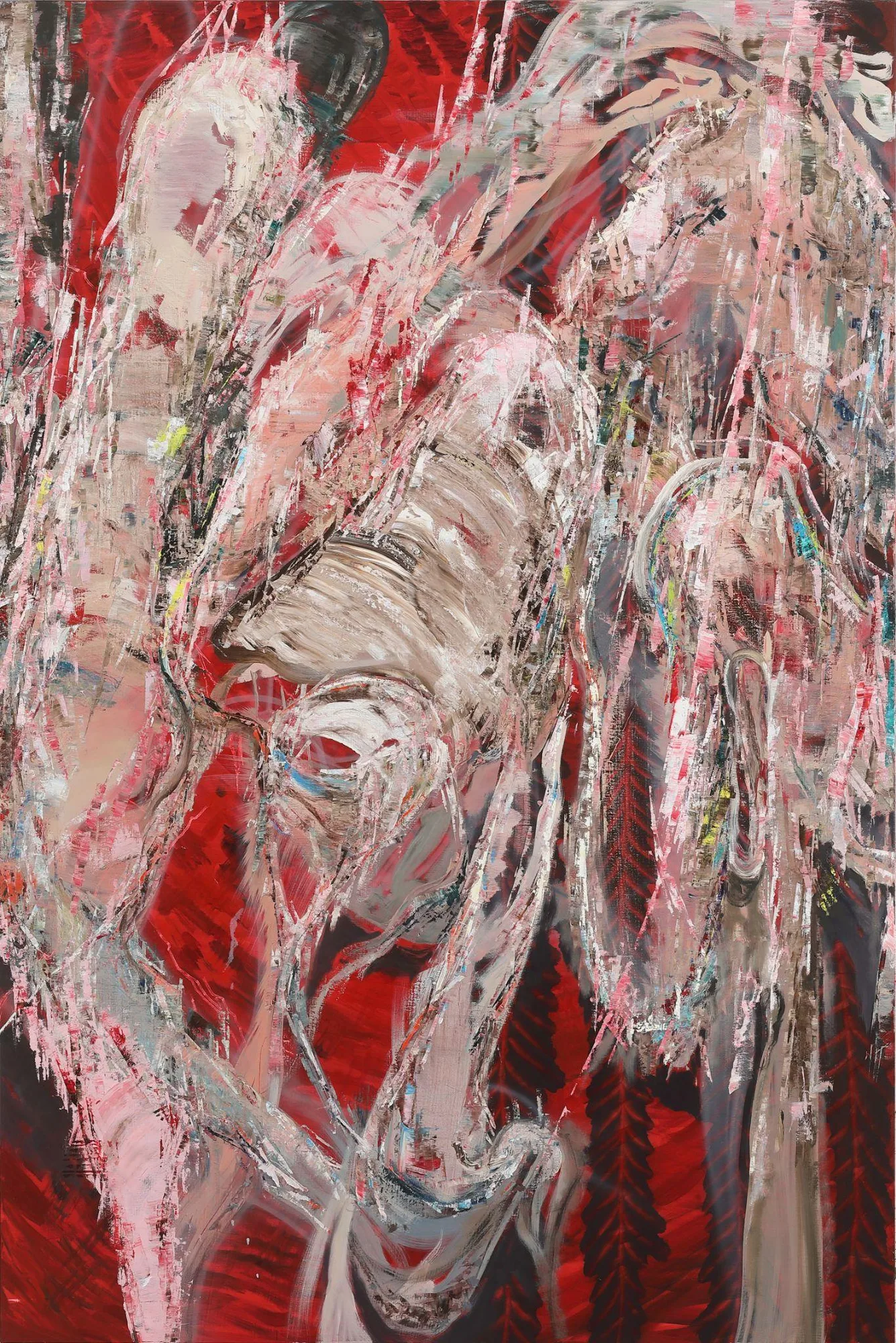
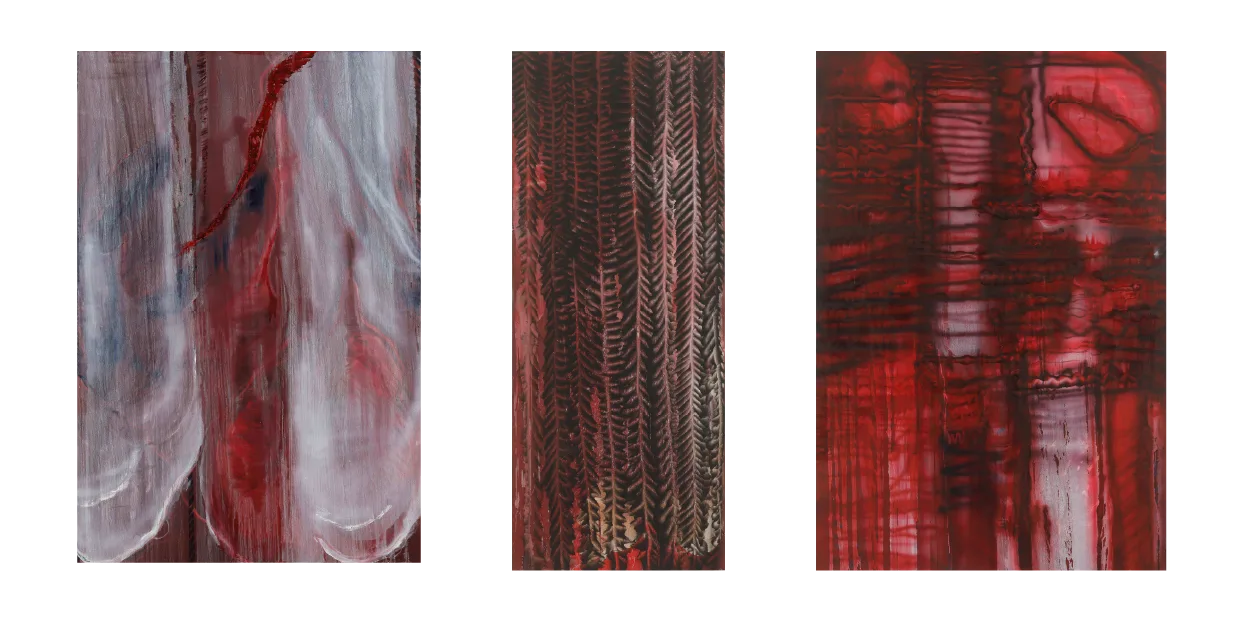
The summer wind and the damp smell of grass revive long-
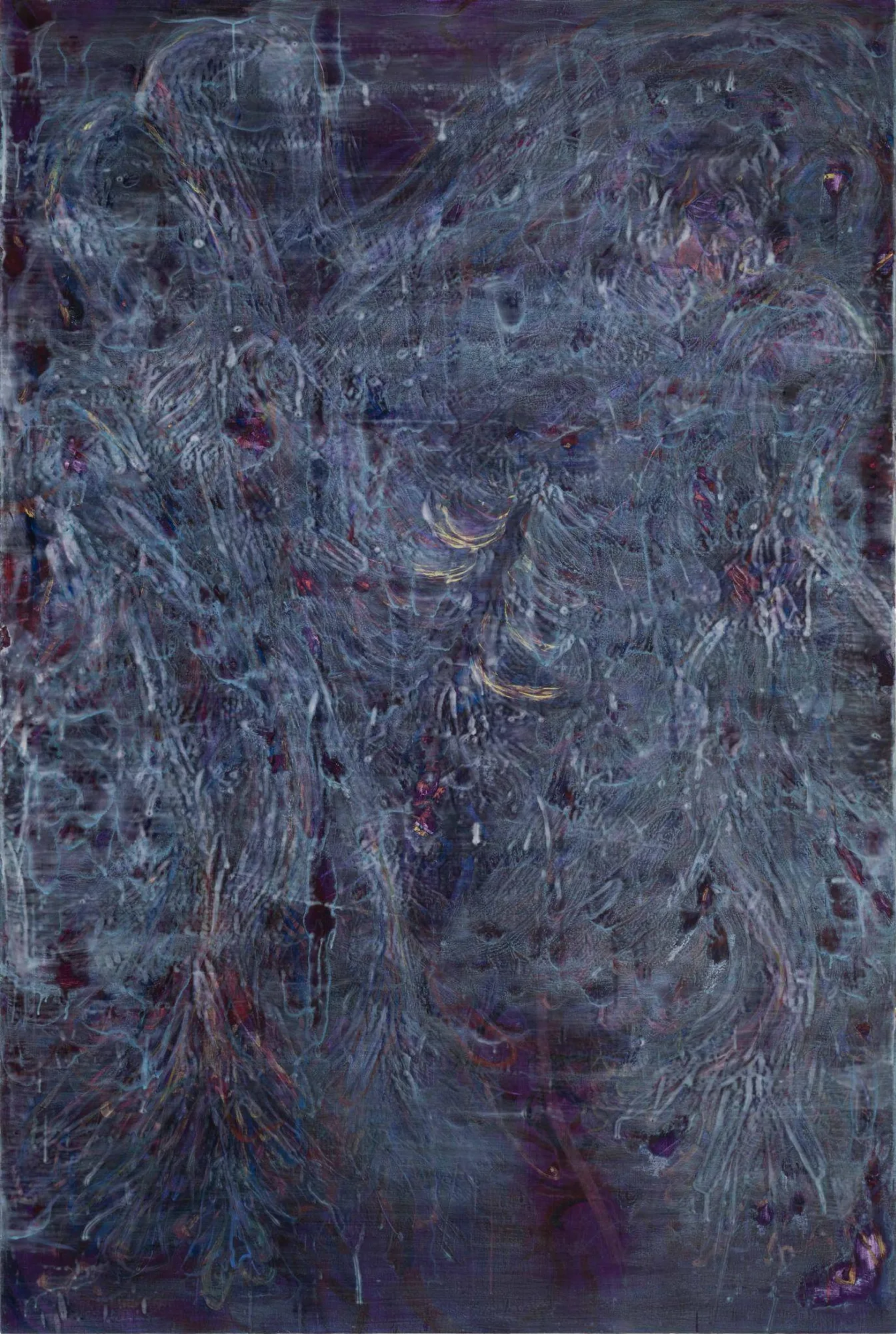
However, the narrative that can be expressed through brushwork is limited to bodily movement, and a fixed medium has its limits in conveying temporality that accumulates in layers. This limitation is to some extent addressed through the artist’s use of thick, residue-
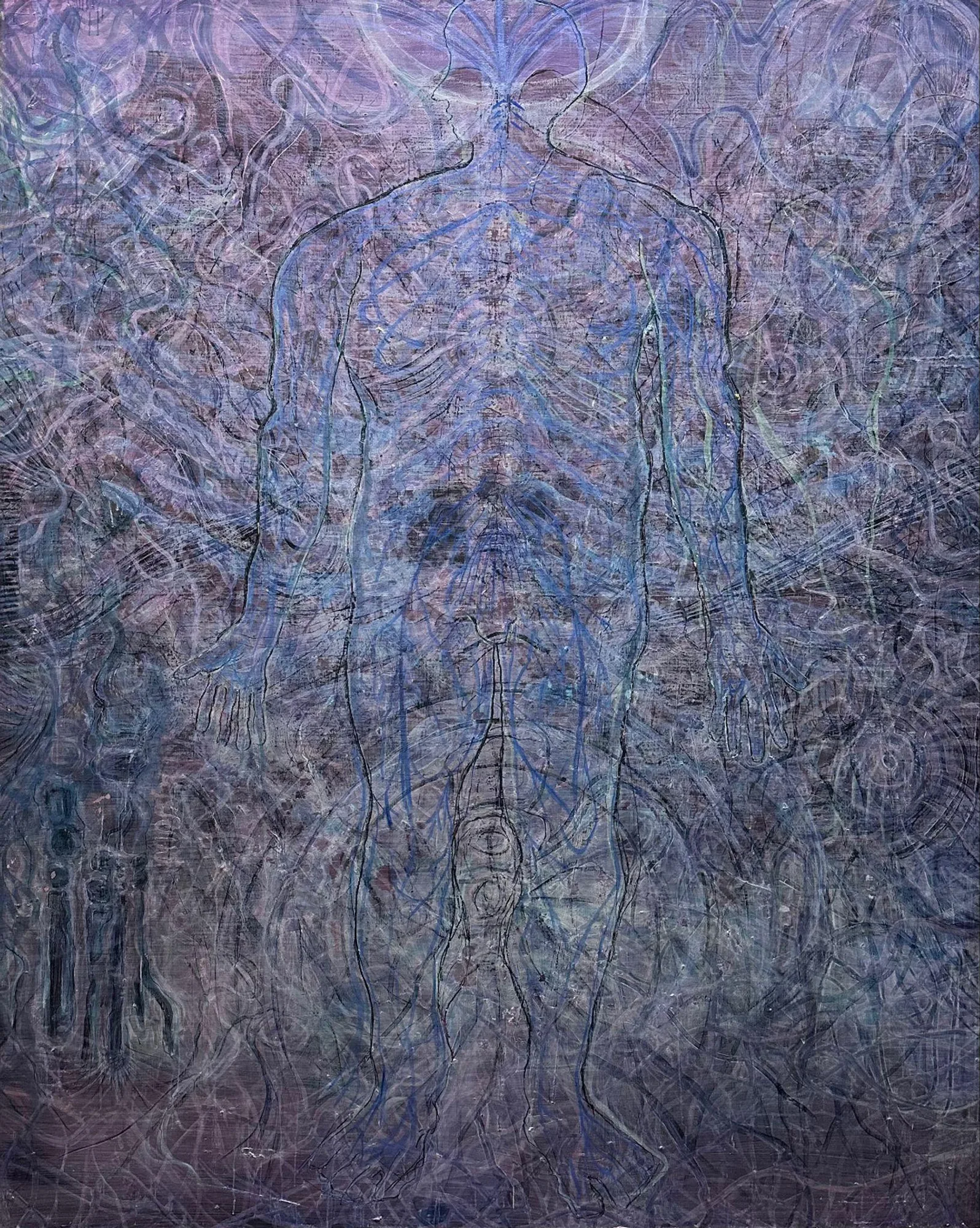
In the artist’s recent work, forms have begun to appear that evoke parts of the body such as the spine and internal organs. These are regions that, both metaphorically and in medical terms, are closely responsive to the nervous system, and also feel like sites where invisible emotions swirl and churn. They can also evoke chakras, which map the flow of bodily energy. However, these references function less as attempts to reproduce specific forms than as triggers that awaken memories and sensations that had been submerged within the artist. Through minimal forms, the work draws out latent sensory experiences and responds immediately to the states that emerge from them. In this sense, what is important in Lee Youngsoo’s painting is not the form itself, but the way sensation moves across the pictorial surface through form as a mediator. Rather than organizing felt sensations into language, Lee seeks to contain them in the painting as they are. While the work unfolds across the canvas in an instinctive and sensory manner, such movements are handled with care so that they are not left unchecked or uncontrolled. What Lee attempts to bring out from this embodied sensibility is not merely an outlet for emotion, but an effort to understand the world through a fully personal language, rather than borrowed terms. With no framework or supporting language to rely on, the artist tries to turn the inside out. He wanders continuously at the intersection where ineffable sensations and blurred memories intersect and diverge.
Lee Youngsoo unfolds movements that arise through his body as if performing an improvised dance. Rather than adopting abstraction as a means of making a statement, this is an attempt to test, through action alone, what painting can do at a site where language cannot reach. Just as he once loosened the constraints of an earlier phase of his practice by transferring what had been expressed through brushwork into the density and unpredictability of cold wax and paraffin, the artist now moves one step further from an expressive phase, expanding his work toward leaving emotion itself on the canvas without relying on figuration. In Lee Youngsoo’s painting, what matters is not what the form signifies, but how it exists and what kinds of sensations it evokes. Within his work, memory and sensation are in constant collision and misalignment. Yet this misalignment is not something to be overcome; rather, it becomes the driving force of painting itself. Embodied sensations naturally summon corresponding images. In infinite time, beginnings and endings are only provisional conditions. Thus, in painting as well, completion is a matter of finding the most complete moment of pause. Lee's canvas likewise proceeds on the premise of continual movement. Painting becomes complete precisely by not arriving anywhere.
[1] 영화 〈이터널 선샤인〉(2004) 속 대사. 주인공들은 기억은 지워졌지만 마음에 잔류하는 감각을 따라 움직인다.
[2] 솔라리스의 바다는 인간의 기억과 죄책감, 트라우마를 형상으로 복제한다. 소설 속 과학자들은 이를 물질과 기억을 연결하는 의미 있는 발견으로 여겼지만, 연구가 진행될수록 솔라리스는 인간의 이해를 벗어나는 모호하고 공허한 세계로 드러난다. 크리스 앞에 나타난 죽은 아내 레야 (하레이) 역시 그의 기억과 고통으로부터 생성된 존재이지만, 정작 기억 자체는 갖고 있지 않다. 대신 크리스가 기억하는 행동과 감정의 흔적만이 몸에 남아 있으며, 자신이 왜 크리스 곁에 머무는지 알지 못한 채 그를 향한 감각적 끌림만을 따른다. 기억의 내용은 소실되었지만 감각은 지속되는 상태인 것이다. 솔라리스의 이러한 설정으로부터 기억과 물성을 연결하는 회화의 가능성과, 그 연결로부터 감각을 다시 분리해내는 이영수의 태도를 함께 살펴보았다.. Stanisław Lem, 1961, Solaris, trans. Joanna Kilmartin and Steve Cox, (Walker and Company, 1970)
[3] 이영수, 침묵의 공간, 2022, 캔버스에 유화, 콜드 왁스, 227.3 × 182.8 cm.
[4] “신체의 윤곽이 드러나지만, 그것은 대상이라기보다 통로에 가깝다. 기억은 몸을 통과하며 형태를 잠시 빌려 나타났다가 다시 흐려진다.” 이영수 작가노트(2026) 중 발췌.
August 2026. Published by ACK. The copyright of the article published by ACK is owned by its author.
2026.08. ACK 발행. ACK (artcritickorea) 글의 저작권은 필자에게 있습니다.